
Crush
Polar bears • boa constrictors • ancient ochre
Welcome to Twig Technology #7! This week, we’re looking back on our favourite crushes. It’s another of those self-explanatory onomatopoeic words, like smash and gnash, likely brought across into English from the Old French cruissir.
For more, visit twig-technology.com, or say hello to me (Dr Michael Haslam) on twitter @twig_technology.
Boulder bear
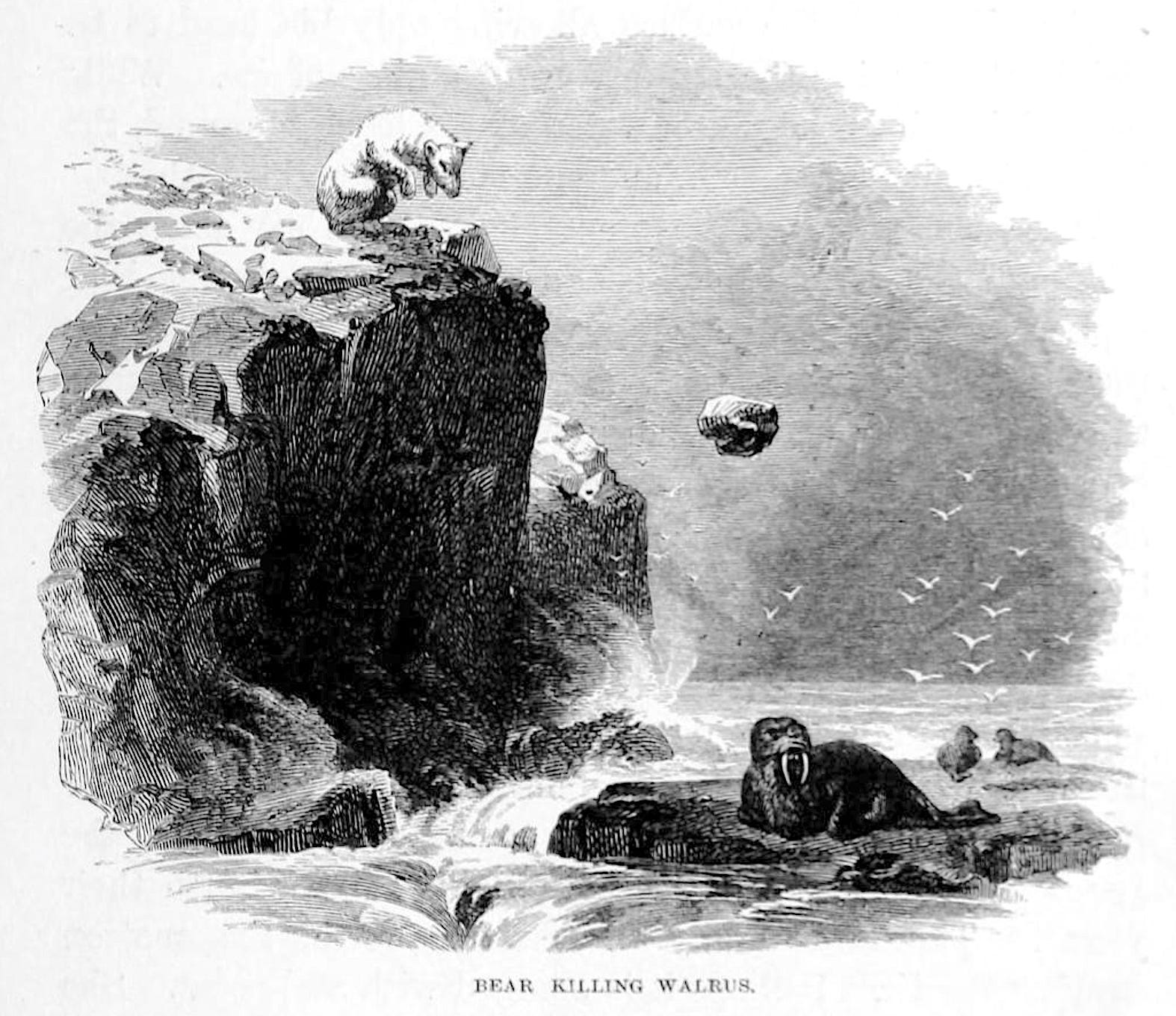
It’s 1845. Polar explorer Sir John Franklin is missing, along with his ships HMS Terror and HMS Erebus. Franklin wasn’t the first to search for new pathways through the northern ice, nor were he and his crew the first to (spoiler) meet a chilly death in the attempt. Throughout the nineteenth century, the romance of the explorer’s life and the promise of fame tempted both serious and somewhat speculative expeditions into remote polar waters. In the latter category was Charles Hall, who tried and failed to find Franklin’s ships in the early 1860s. What he did manage, though, was to record a large number of the habits and tales of the local human inhabitants, which he termed ‘Esquimaux’. And they related an astonishing—and to this day unverified—fact: polar bears throw rocks onto resting walruses to crush their skulls.
Learn more (via Twig Technology)…
A rush of blood
We all know how boa constrictors work, right? These giant snakes, native to Central and South America, wrap themselves around you and slowly squeeze, crushing your lungs until until they literally take your breath away. But scientists at Dickinson College in Pennsylvania think that we may be missing the point: as detailed by Jason Bittel from National Geographic, the snakes may instead be cutting off blood supply. The important thing is to get the job done quickly. “Most animals can actually survive a relatively long time without breathing: Think about drowning people who are later resuscitated…But the same isn't true for a body without a heartbeat”.
Learn more (via National Geographic)…
Sunscreen or symbol?
As the pandemic swept through 2020, one of the many changes in consumer trends was that people bought less lipstick and other makeup. Without face-to-face interaction, the reasoning went, there was less need to paint ourselves as part of our social rituals. What was less obvious was that those rituals tap into a trend that goes back tens of thousands of years. Gemma Tarlach takes us deep into the world of ochre, mineral pigments that humans (and even Neanderthals) have been crushing and using since very ancient times. But why? Was ochre’s deep red colour a social signal to help us with trade between groups, a handy ingredient to help glue tools together, or even a type of sunscreen?
Learn more (via Discover Magazine)…
Video: Don’t forget to chew…
Table manners. Who needs them? Sometimes you just want to tear through your meal, no matter how tough it is - all that’s required are incredibly strong jaws. And so the obvious question: which animal has the most crushing bite force? Lizzie Daly & Ben Garrod join BBC Earth to sink their teeth into the topic…
Thanks for reading. If you think someone you know might enjoy this kind of thing, feel free to share using the link below. See you next time!